Which Industries Score Highest on AEO in 2026?
Our aggregate audit data across 29 sites shows SaaS developer tools averaging 53/100 on AEO, outpacing AI startups at 48 and general SaaS at 45. Here's what separates the leaders.
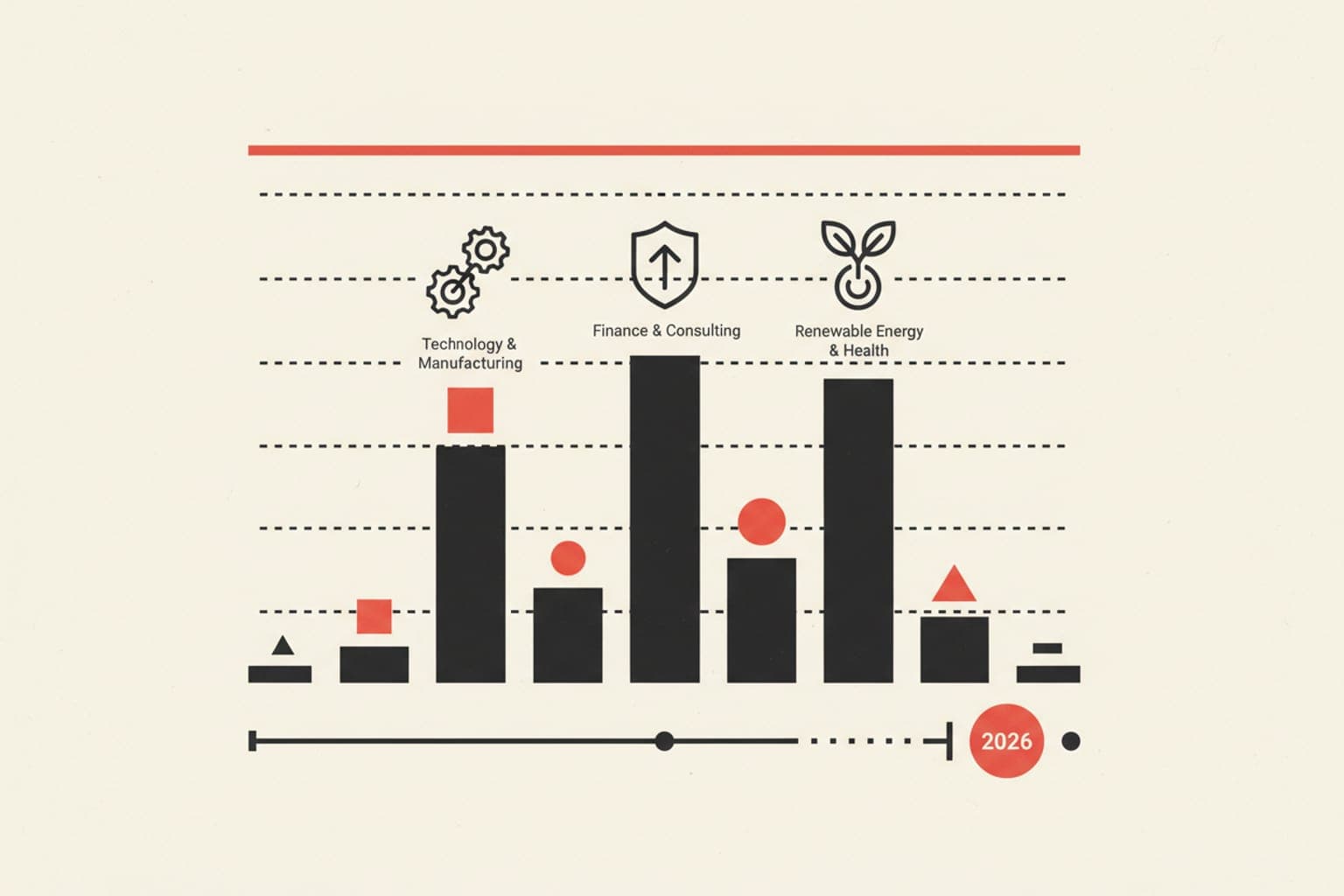
SaaS developer tools score highest on AEO readiness in our aggregate audit data, averaging 53 out of 100 across 8 audited sites. AI startups follow at 48, and general SaaS at 45. No industry in our sample clears 60 — a sign that AEO is still early-stage work across the board.
What Is AEO and Why Does It Matter?#
Answer Engine Optimization (AEO) is the practice of structuring web content so AI-powered search engines — ChatGPT, Perplexity, Google AI Overviews, and others — can extract and cite it accurately. Unlike classic SEO, AEO rewards direct-answer formatting, structured data, and semantic clarity over keyword density.
Sites that score well on AEO are more likely to appear as cited sources inside AI-generated answers, which increasingly bypass the traditional blue-link SERP entirely.
How Were AEO Scores Calculated?#
Scores in this dataset come from public audits run through SeoChatAI, which evaluates pages across multiple AEO signals:
- Direct-answer content: Does the page answer questions in concise, citable paragraphs?
- Structured data: Schema markup (FAQ, HowTo, Article) that AI parsers rely on.
- Semantic heading structure: H1–H3 hierarchy with question-style headings.
- Entity clarity: Named entities (brand, product, author) consistently identified.
- Page authority signals: Backlink profile and E-E-A-T indicators.
The aggregate dataset covers 29 sites across three industry tags as of mid-2026.
Which Industry Scores Highest on AEO?#
SaaS developer tools lead with an average AEO score of 53/100 across 8 sites. This is likely because developer-tool sites are already structured around technical documentation — direct answers, code snippets, and precise terminology that AI engines parse well.
Why Do Developer Tools Have an Advantage?
Developer-facing content naturally aligns with AEO best practices:
- Documentation pages answer specific how-to questions.
- Code-heavy content has low ambiguity, making it easier for AI to extract.
- These sites frequently use structured data for API references and tutorials.
- Audiences demand clarity, so content is written concisely by default.
This structural advantage transfers directly into AI-search readiness without deliberate AEO effort.
Where Do AI Startups Rank?#
AI startups average 48/100 across 6 audited sites — second in the ranking but still 5 points behind developer tools. The gap is notable given that these companies build AI products and might be expected to optimize for AI search.
The likely explanation: AI startup sites prioritize funding narratives and feature announcements over educational, answer-oriented content. Marketing copy doesn't cite well in AI engines. Structured explainers do.
How Does General SaaS Compare?#
General SaaS sites average 45/100 across the largest cohort — 10 sites. This cohort is the most heterogeneous: project management tools, CRM platforms, billing software. Without a documentation-first culture, their content skews toward benefit statements rather than direct answers.
A 45 score indicates partial AEO readiness — some structured data present, some question headings, but inconsistent application across the site.
What Does a Score of 53 Actually Mean?#
Even the top-performing industry in our sample sits at just over halfway. That ceiling reflects how immature AEO practice is across industries. A score of 53 means:
- Some pages have FAQ schema but most do not.
- Heading structures are inconsistent.
- Entity markup is sparse.
- Direct-answer paragraphs appear in documentation but not in blog or marketing content.
There is significant headroom. Sites that systematically apply AEO across all content types — not just docs — should be able to push scores into the 70–80 range.
What Can Lower-Scoring Industries Learn From Developer Tools?#
The structural lessons from SaaS developer tools apply to any industry:
- Lead with the answer — put the direct response in the first sentence after a question heading, not three paragraphs in.
- Deploy FAQ schema sitewide — not just on a dedicated FAQ page.
- Use question-format H2s — AI engines treat these as citation anchors.
- Define every entity — brand name, product name, author name with consistent markup.
- Audit at the page level — a high-scoring homepage doesn't compensate for unstructured blog posts.
Running a site-level audit with a tool like SeoChatAI surfaces exactly which pages are dragging down the average.
What Industries Are Missing From This Dataset?#
The current 29-site sample covers only three industry tags. Industries not yet represented include e-commerce, healthcare, finance, legal, and media publishing — all of which have distinct content structures and likely very different AEO profiles.
As the audit dataset grows, expect significant variance. Regulated industries (healthcare, finance) often have compliance-driven content that avoids direct claims, which may suppress AEO scores. Media publishers may score well on semantic richness but poorly on structured data.
Key Takeaways#
- SaaS developer tools lead AEO readiness at 53/100, driven by documentation-first content culture.
- AI startups score 48 despite building AI products — a content strategy gap, not a technical one.
- General SaaS lags at 45 due to benefit-driven copy that AI engines struggle to cite.
- No industry in the sample clears 60, meaning AEO is a genuine competitive opportunity right now.
- The highest gains will come from applying AEO principles consistently across all page types, not just documentation.
