ChatGPT Search vs Perplexity: Which Engine Cites You?
ChatGPT Search and Perplexity both pull from the live web, but their citation behaviors differ significantly. Here's what SEO practitioners need to know to earn consistent mentions in both engines.
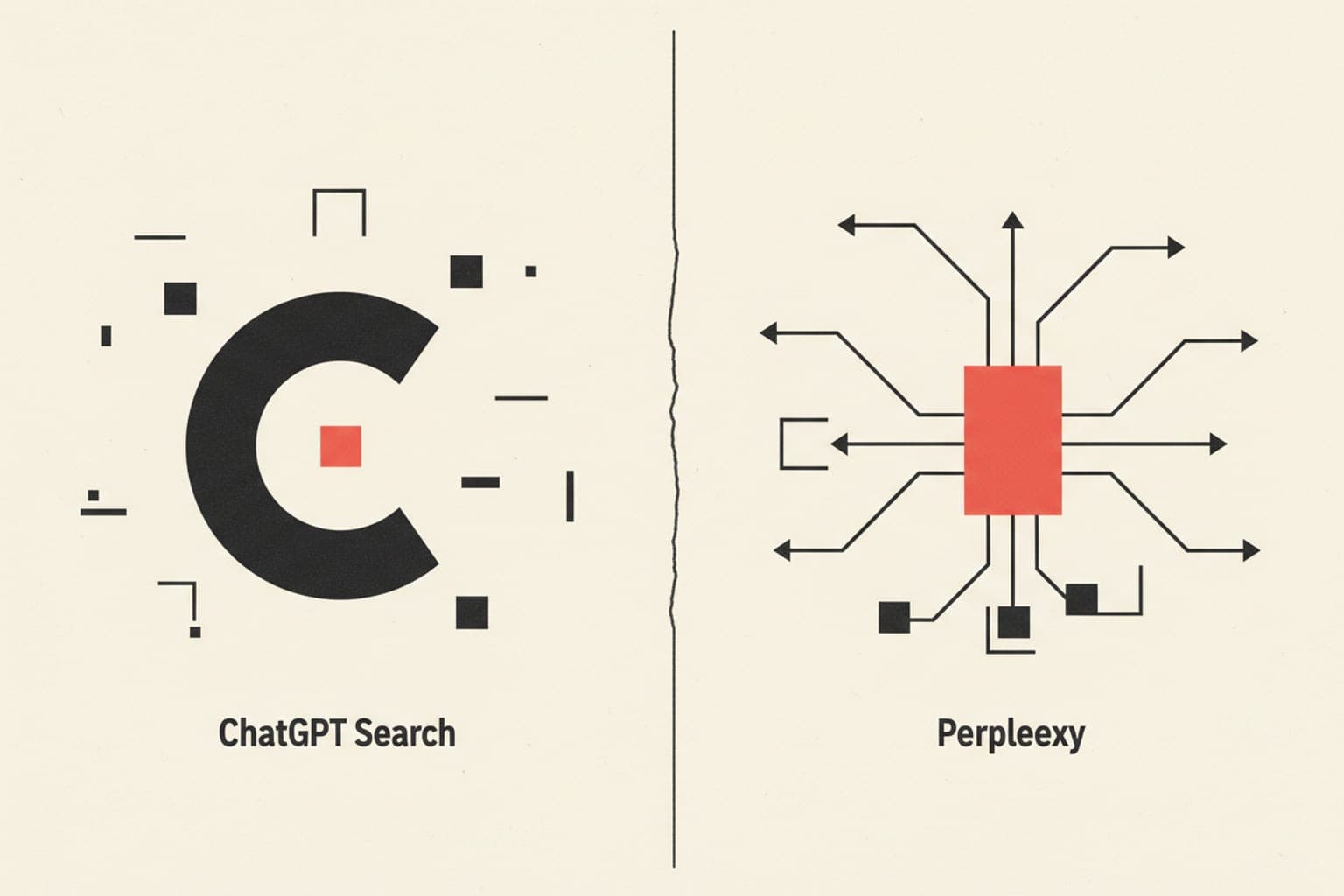
ChatGPT Search and Perplexity are the two dominant AI search engines practitioners worry about today. Both retrieve live web content, but they make different decisions about which sources to surface and how to credit them. Understanding those differences is the first step toward earning reliable citations in either engine.
What Is the Difference Between ChatGPT Search and Perplexity?#
ChatGPT Search is OpenAI's web-retrieval layer built into ChatGPT. It fetches real-time results and weaves them into a conversational answer, appending numbered footnotes to specific claims. Perplexity operates as a dedicated answer engine — its core product is a cited response, not a chat conversation, and it displays source cards prominently alongside every answer.
The structural difference matters: Perplexity was designed around citations, whereas ChatGPT Search added retrieval to an existing conversational model. This shapes how each engine selects and surfaces sources.
How Does ChatGPT Search Decide Which Sources to Cite?#
ChatGPT Search uses Microsoft Bing's index as its primary retrieval layer, combined with OpenAI's own ranking signals. It tends to cite sources that:
- Rank highly in Bing for the query in question
- Contain structured, factually dense content (definitions, statistics, step-by-step guides)
- Use clear heading hierarchies that match the user's intent
- Load quickly and pass basic technical thresholds
Because ChatGPT Search is conversational first, it often synthesizes multiple sources into a single paragraph and attaches only one or two footnotes — meaning fewer total citations per answer compared with Perplexity.
Does ChatGPT Search Cite Every Source It Uses?
No. ChatGPT Search frequently paraphrases content without attribution. A page may contribute factual substance to an answer while receiving no visible footnote. This is a known frustration for publishers: your content can train the response without your brand receiving credit.
How Does Perplexity Decide Which Sources to Cite?#
Perplexity cites more aggressively. A typical Perplexity answer surfaces four to six source cards per query, displayed as a dedicated panel before or alongside the prose answer. It retrieves from multiple indexes — Bing, its own crawl, and partner data sources — and is more likely to surface mid-authority pages that directly address a specific sub-question.
Perplexity's citation model rewards:
- Pages that answer a precise question in the first 100–150 words
- Content with a clear author, publication date, and structured metadata
- Sites that have opted into Perplexity's publisher program or have not blocked its crawler (
PerplexityBot) - Topically specific articles rather than broad overviews
Does Blocking AI Crawlers Affect Perplexity Citations?
Yes, directly. If your robots.txt disallows PerplexityBot, Perplexity cannot crawl fresh content from your site and will rely on cached or third-party copies — reducing citation frequency and accuracy. ChatGPT Search uses Bing's index, so blocking GPTBot affects fine-tuning but may not immediately remove you from search citations if Bing has already indexed the page.
Which Engine Is More Likely to Cite Your Site?#
Based on the structural behavior of both engines, Perplexity is currently more citation-friendly for mid-authority publishers. Its answer format demands sources, so it cites more pages per query. ChatGPT Search is more selective and consolidates citations, which means higher-authority domains capture a disproportionate share of footnotes.
Practically:
- New or mid-authority sites are more likely to earn Perplexity citations first.
- Established Bing-ranking domains are more likely to earn ChatGPT Search citations.
- Both engines favor content with direct-answer structure, schema markup, and fast page load.
How Should You Optimize Content for Both Engines?#
The good news: the structural signals that help you get cited in Perplexity overlap heavily with those that improve ChatGPT Search visibility. Focus on:
- Direct-answer openings — answer the core question in the first paragraph, not the third.
- Question-format H2s and H3s — AI engines parse headings to map intent; align yours with real user queries.
- Structured data —
Article,FAQPage, andHowToschema give both engines parseable context. - Crawlability — allow
PerplexityBot,GPTBot, andBingbotin yourrobots.txtunless you have a specific commercial reason to block them. - Author and date signals — Perplexity in particular weights content freshness and author credibility.
- Concise, factually dense paragraphs — neither engine rewards padding; both reward precision.
Running a technical and AEO audit with a tool like SeoChatAI can surface the specific gaps — blocked crawlers, missing schema, slow response times — that prevent either engine from citing your content reliably.
What Role Does Domain Authority Play in AI Citations?#
Domain authority (or domain rating) still matters, but it operates differently across these two engines. ChatGPT Search, routing through Bing, inherits Bing's authority signals — meaning a high-DA domain has a meaningful advantage. Perplexity's own crawl is more query-specific: a precise, well-structured article on a lower-DA site can outrank a general page on a high-DA site for a narrow question.
This creates an opportunity for specialist publishers. A focused industry blog with strong topical authority can earn consistent Perplexity citations even without broad link equity.
How Can You Track Whether AI Engines Are Citing You?#
Neither ChatGPT Search nor Perplexity sends referral traffic the way Google does, making attribution difficult. Practical approaches include:
- Manual spot-checks — query your target topics in both engines and look for your domain in footnotes.
- Server log analysis — look for
PerplexityBotandGPTBotcrawl activity as a proxy for indexation. - UTM-tagged URLs in your content — if Perplexity surfaces a cached version with your UTM parameters, you may see a small trickle in analytics.
- Third-party AEO auditing tools — platforms like SeoChatAI are building structured ways to audit AI-search visibility alongside traditional technical SEO signals.
Summary: ChatGPT Search vs Perplexity Citation Reliability#
| Factor | ChatGPT Search | Perplexity |
|---|---|---|
| Citations per answer | 1–3 (selective) | 4–6 (consistent) |
| Index source | Primarily Bing | Bing + own crawl |
| Mid-authority site opportunity | Lower | Higher |
| Crawler to allow | GPTBot | PerplexityBot |
| Rewards direct-answer structure | Yes | Yes |
| Rewards schema markup | Yes | Yes |
For most publishers, Perplexity currently offers the more reliable citation path — but ChatGPT Search's reach is substantially larger. Optimizing for both engines simultaneously costs little extra effort once you align your content structure to the shared fundamentals above.
