Schema Markup Adoption: How Many Sites Use Valid JSON-LD?
Valid JSON-LD schema markup remains rare across the web. This guide explains what adoption looks like, why most sites fail structured-data checks, and what you can do to stand out in AI-powered search results.
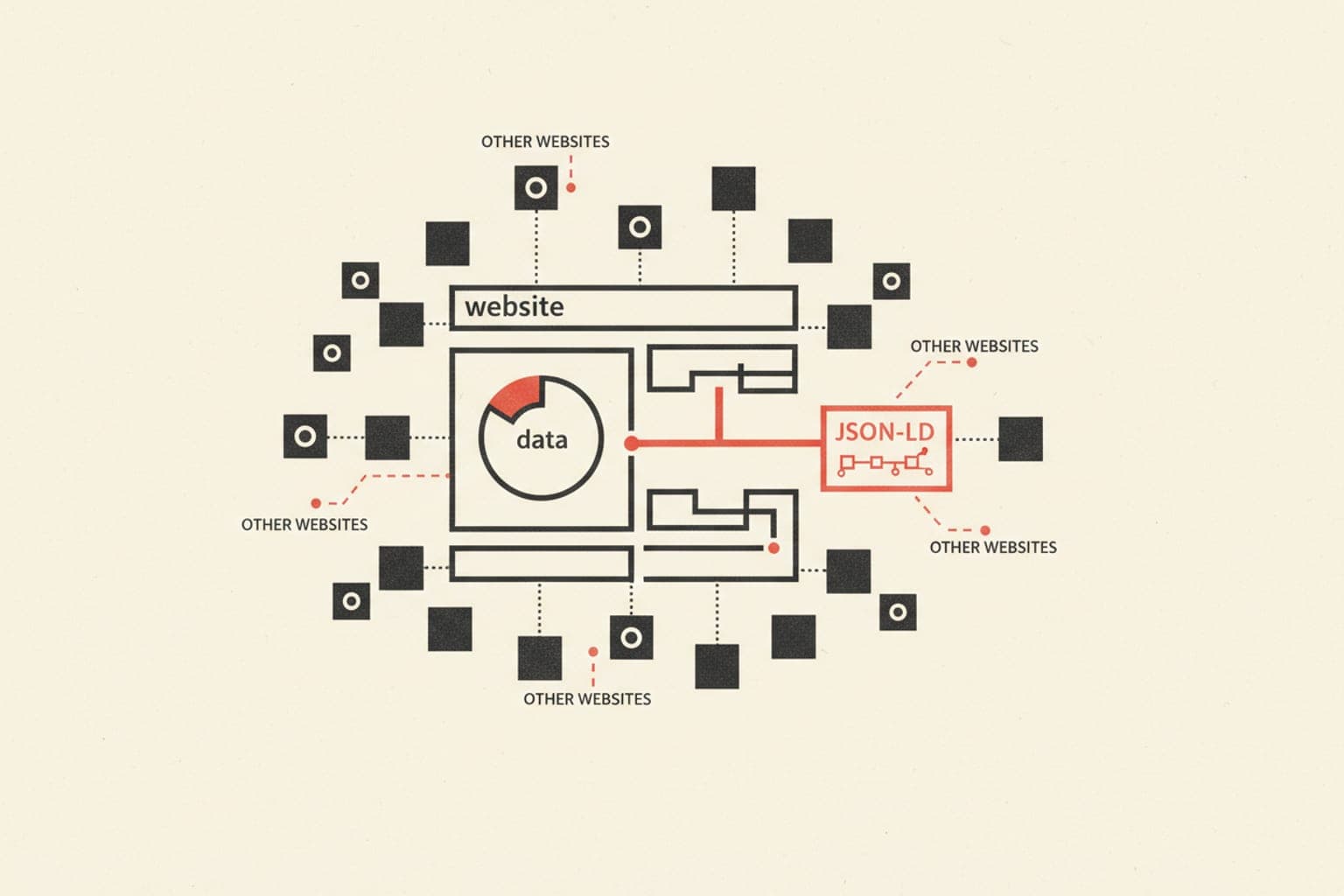
Valid JSON-LD schema markup is one of the most impactful — and most neglected — technical SEO signals on the modern web. Sites that implement it correctly gain rich results, stronger AI-search citations, and clearer entity recognition. Sites that skip it leave measurable ranking potential on the table.
What Is Schema Markup and Why Does JSON-LD Matter?#
Schema markup is structured data vocabulary — drawn from Schema.org — that tells search engines exactly what your content represents: an article, a product, a local business, a FAQ. JSON-LD (JavaScript Object Notation for Linked Data) is Google's preferred implementation format because it lives in a <script> tag, completely separate from visible HTML, making it easy to add and maintain without touching page layout.
The alternative formats — Microdata and RDFa — require inline attribute tagging on existing HTML elements, which increases implementation friction and error rates. JSON-LD avoids that entirely.
How Widely Adopted Is Valid Schema Markup?#
Adoption figures vary depending on the dataset, but the consistent pattern across independent audits is the same: the majority of crawlable websites either have no structured data at all, or have structured data with validation errors that prevent rich-result eligibility.
Key patterns observed across SEO tooling and public crawl research:
- Many sites copy-paste schema snippets without validating them against Google's Rich Results Test or Schema.org validators.
- Errors like missing required properties (
name,url,description), incorrect@typevalues, or malformed@contextdeclarations are extremely common. - E-commerce and news publishers tend to have higher adoption than small business, SaaS, or portfolio sites.
- JavaScript-rendered schema — placed in client-side JS rather than server-rendered HTML — frequently fails to be indexed at all.
What Types of Schema Are Most Commonly Used?#
Among sites that do implement structured data, a small set of types dominates:
- Organization / LocalBusiness — often auto-generated by CMS plugins
- WebSite / Sitelinks SearchBox — added by SEO plugins like Yoast or RankMath
- Article / NewsArticle / BlogPosting — frequently used by publishers
- Product + Offer — used by e-commerce platforms
- FAQPage — surged in popularity after Google introduced FAQ rich results
- BreadcrumbList — common on larger content sites
Noticeably absent from most small and mid-sized sites: HowTo, Event, Review, VideoObject, and Course — all of which can trigger highly visible SERP features.
Why Do So Many Sites Have Invalid Structured Data?#
Invalid schema is arguably worse than no schema in some contexts — it wastes crawl resources and creates misleading signals. The most frequent failure modes are:
- Missing required properties: Schema.org and Google both define recommended vs. required fields. Many implementations omit required fields and still ship.
- Stale or hardcoded values: Prices, dates, and availability statuses left unchanged after the source content updates.
- Duplicate or conflicting markup: Multiple JSON-LD blocks on the same page asserting different
@typefor the same entity. - CMS plugin defaults: Plugins that auto-generate schema using template values that never get customized.
- No post-deployment validation: Teams implement schema once, then never re-audit after site redesigns or CMS migrations.
How Does Schema Markup Affect AI Search and Answer Engines?#
This is where the stakes have meaningfully increased since 2023. AI-powered answer engines — including Google's AI Overviews, Bing Copilot, and Perplexity — use structured data as a high-confidence signal when constructing answers. When your page's FAQPage or HowTo schema is valid and specific, you give these systems a pre-parsed, machine-readable answer they can cite directly.
Without valid schema, AI systems must infer meaning from prose alone — a noisier, less reliable signal that increases the chance your content is overlooked or misrepresented in an AI-generated response.
How Can You Audit and Fix Your Schema Markup?#
A structured approach removes guesswork:
- Crawl your site with a tool that surfaces missing and invalid structured data across all page types — not just the homepage.
- Validate each schema block using Google's Rich Results Test and the Schema Markup Validator.
- Prioritize by page type: Product pages, article pages, and FAQ content have the highest ROI for structured data fixes.
- Generate clean, valid JSON-LD for page types that are missing it. Our schema generator tool produces validated output for the most common Schema.org types without requiring manual coding.
- Re-audit after every major CMS update or redesign — these events silently break structured data more often than most teams realize.
What Is the Fastest Way to Add JSON-LD to a Site?#
The fastest path is a dedicated schema generation tool that outputs ready-to-paste, validated JSON-LD. Manual coding from Schema.org documentation is error-prone and slow. CMS plugins are faster but often produce generic output that doesn't reflect your specific content.
For teams managing multiple page templates, the schema generator at SeoChatAI lets you build type-specific markup and validate it before deployment — reducing the revision cycle that slows most schema projects down.
Key Takeaways#
- Valid JSON-LD schema remains uncommon across the web; even sites with some structured data frequently have validation errors that disqualify them from rich results.
- AI search engines treat valid schema as a high-confidence signal for answer generation — making this more valuable now than in a purely keyword-driven SEO context.
- The fix is straightforward: crawl, validate, generate clean markup, and re-audit regularly.
- Don't rely on CMS plugin defaults without customizing and verifying the output.

Probieren Sie unser kostenloses JSON-LD schema generator
Artikel lesen