How to Add Article JSON-LD That AI Search Engines Cite
Article JSON-LD tells AI search engines exactly what your content is, who wrote it, and why it's authoritative. This guide shows you how to implement it correctly so your pages get cited, not skipped.
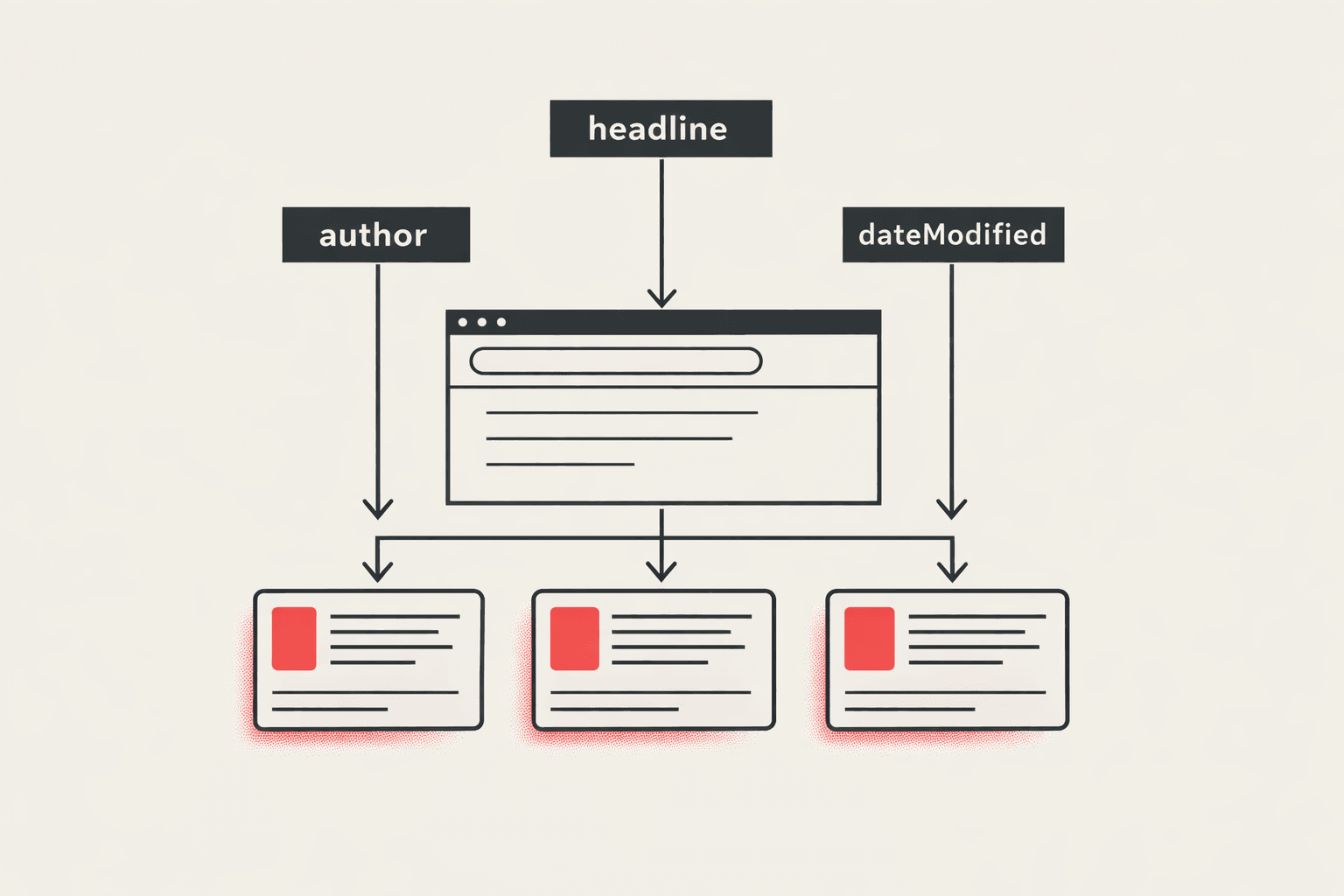
Article JSON-LD is the single most actionable schema type for earning citations in AI-powered search engines like Perplexity, ChatGPT Search, and Google's AI Overviews. Get it right, and you give answer engines a structured, machine-readable signal that your content is authoritative, attributable, and safe to quote.
What Is Article JSON-LD?#
Article JSON-LD is a block of structured data — embedded in your page's <head> or <body> — that describes a piece of content using the Schema.org Article vocabulary. It tells crawlers the headline, author, publisher, publication date, and more in a format no parser has to guess at. Unlike microdata or RDFa, JSON-LD sits in a self-contained <script> tag, which makes it easy to inject without touching your HTML templates.
Why Do AI Search Engines Care About It?#
AI answer engines retrieve candidate passages, then rank them partly by trustworthiness signals. A page with a well-formed Article schema communicates four trust signals at once:
- Authorship —
author.nameandauthor.urlmap to a real entity. - Recency —
datePublishedanddateModifiedtell the model how fresh the information is. - Publisher identity —
publisher.nameandpublisher.logoanchor the content to an organization. - Canonical URL —
mainEntityOfPageremoves ambiguity about which URL should be cited.
Without these, the model either infers them (risking errors) or deprioritizes the page in favor of one that makes the signals explicit.
Which Article Schema Type Should You Use?#
Schema.org offers three subtypes under Article:
Article— general-purpose; safe default for most editorial content.NewsArticle— for time-sensitive journalism; triggers Google's Top Stories carousel.BlogPosting— for personal or brand blogs; lower authority signal thanArticlein most AI ranking contexts.
For how-to guides, educational content, and product explainers, use Article. Reserve NewsArticle for content with genuine news intent, because mislabeling triggers quality filters.
How to Write a Minimal Valid Article JSON-LD Block#
Paste this into your <head> and substitute your own values:
<script type="application/ld+json">
{
  "@context": "https://schema.org",
  "@type": "Article",
  "headline": "How to Add Article JSON-LD That AI Search Engines Cite",
  "description": "A practical guide to implementing Article schema markup for AI search citation.",
  "image": "https://example.com/images/article-hero.jpg",
  "author": {
    "@type": "Person",
    "name": "Jane Smith",
    "url": "https://example.com/authors/jane-smith"
  },
  "publisher": {
    "@type": "Organization",
    "name": "Example Media",
    "logo": {
      "@type": "ImageObject",
      "url": "https://example.com/logo.png"
    }
  },
  "datePublished": "2025-01-15",
  "dateModified": "2025-07-10",
  "mainEntityOfPage": {
    "@type": "WebPage",
    "@id": "https://example.com/json-ld-for-articles"
  }
}
</script>
Every field above is load-bearing. Remove dateModified and AI engines treat your content as potentially stale. Remove author.url and you lose the entity disambiguation that E-E-A-T signals depend on.
How to Extend It for Stronger AI Citation Signals#
A minimal block passes validation. A complete block earns citations. Add these properties to push further:
wordCount
An integer. Helps AI systems assess depth before fetching the full body.
articleSection
A string or array of strings matching your site's taxonomy (e.g., "SEO", "Structured Data"). This helps topic-classification models slot your page correctly.
keywords
A comma-separated list of terms. Not a ranking factor for traditional SEO, but useful for retrieval-augmented generation (RAG) pipelines that match queries to document metadata.
speakable
Points to CSS selectors or xPaths that contain the passage most suitable for voice or AI summarization. This is the closest thing to a "cite this" instruction you can give an answer engine.
"speakable": {
  "@type": "SpeakableSpecification",
  "cssSelector": [".article-summary", "h2", "h3"]
}
isPartOf and isAccessibleForFree
If your content sits behind a metered paywall, declare it. Undisclosed paywalls cause crawlers to index the teaser and AI engines to cite content users can't reach — a trust-killer.
How to Validate Your Article Schema#
Validation is a two-step process:
- Syntax check — Paste your JSON-LD into Google's Rich Results Test. It flags malformed JSON and missing required properties.
- Entity check — Run your page through the SeoChatAI Schema Generator to confirm your author and publisher entities resolve cleanly and that no fields conflict with your on-page content.
The most common error: dateModified is older than datePublished due to a copy-paste bug. Google's parser rejects the block silently.
Where Should You Place the JSON-LD Script Tag?#
Place it inside <head>. While Google's documentation says body placement is technically supported, several third-party AI crawlers — including those powering Perplexity and Bing Copilot — parse <head> first and may exit before reading body scripts on large pages. Head placement is always safer.
For CMS users:
- WordPress — Use a plugin like Yoast SEO or RankMath, or add a
wp_headaction hook withwp_enqueue_scriptset tofalse(inline output). - Next.js — Use the
<Script>component withstrategy="beforeInteractive"or inject directly into<Head>. - Webflow — Paste the script block into the page's Custom Code → Head section.
What Mistakes Break AI Citability?#
- Mismatched headline —
headlinein JSON-LD differs from the visible<h1>. AI engines cross-check these; a mismatch signals low quality. - Generic author —
"author": {"@type": "Person", "name": "Admin"}provides no entity signal. Use real names with author pages. - Missing
image— Several AI answer UIs display a thumbnail alongside citations. No image means no thumbnail and lower visual prominence. - Stale
dateModified— Update it every time you revise the content. Treat it as a freshness timestamp, not a formality. - Multiple conflicting blocks — If your CMS and a plugin both inject
Articleschema, parsers pick one arbitrarily. Audit with the SeoChatAI Schema Generator to catch duplicates.
How Often Should You Update Article JSON-LD?#
Update dateModified on every substantive edit — not typo fixes, but any change that affects factual accuracy, depth, or conclusions. AI search engines weight recency differently by query type: for evergreen how-tos, a six-month-old dateModified is fine; for topics tied to software versions or regulations, anything older than 90 days risks being deprioritized in favor of fresher sources.
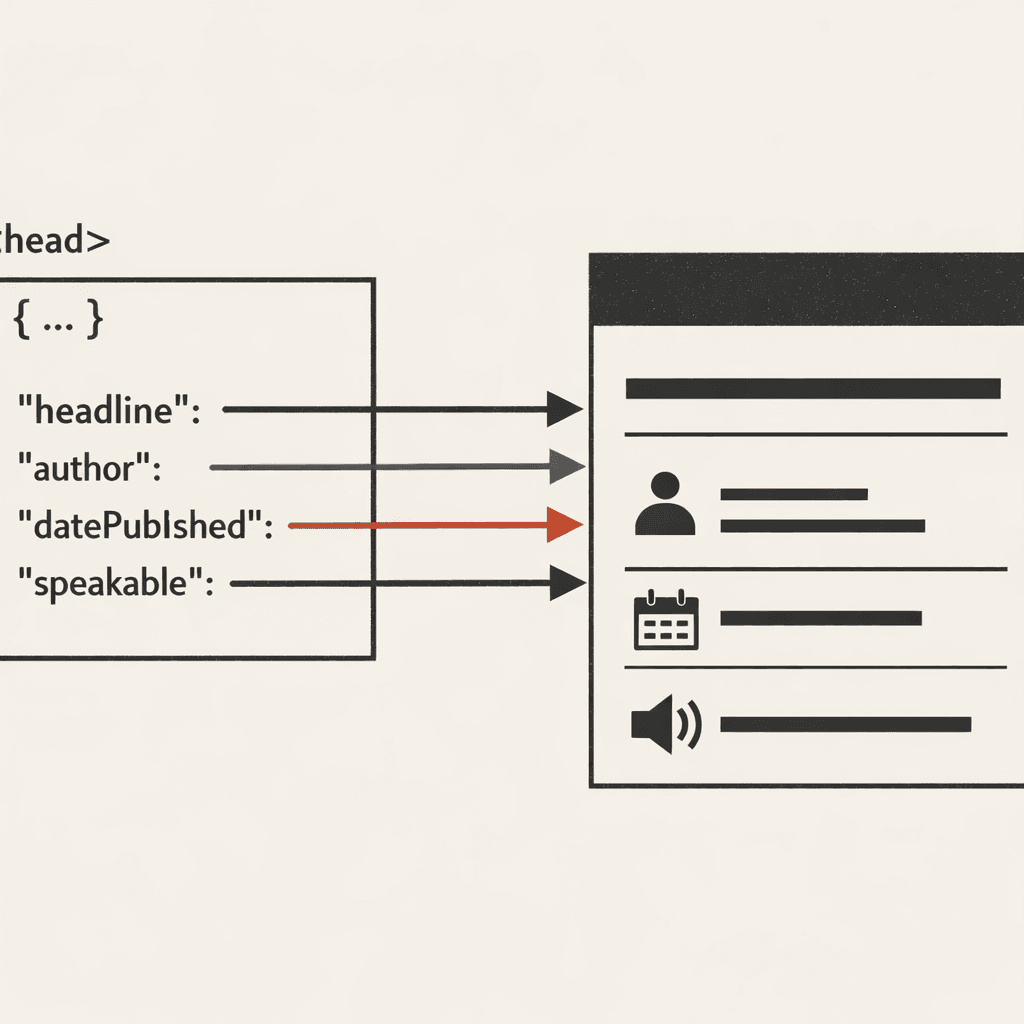
Probieren Sie unser kostenloses JSON-LD schema generator
Artikel lesen